Yoshinori Ito, assistant trainer
“He stayed at the training center after the Tenno Sho (Autumn). We let him have it easy for a week after the race, but he came out of the race much better than we’d anticipated. A week before race week, he’ll usually work with a partner on the flat course and push him hard. However, this time with only three full weeks in between races, he worked alone and we had the jockey get the horse’s pulse up and check his lungs and other things. Looking at his performance in the Takarazuka Kinen and the Tenno Sho (Autumn), I think he can handle any course. If he can handle the trip, I don’t think it would be too much of a surprise if he does well.”

Takashi Saito, trainer
“His inside draw in the Tenno Sho (Autumn) worked against him and he wasn’t able to make a move when needed. It was a very difficult race for any horse running from further back than 10th position. He came out of the race well, so we set our sights on here. He looked spent over the last furlong in his final work before the Tenno Sho and I think that was a factor in his race results. Cristian Demuro rode his last fast work (on Nov. 25) and the work was based on what the jockey had requested (four furlongs with a bit of encouragement just before the end). Demuro said all went well. I, personally, think the horse could have moved with a bit more fluidity, as he does when he’s at his best. I had similar concerns before his last race and the desired result wasn’t there. I’m not exactly sure how to proceed. We have options for work on Friday and Saturday, so we’ll see how he’s looking. It’s a privilege to be competing against the world’s best while here in Japan. We don't want to be outdone, so we’re going to give it our all."
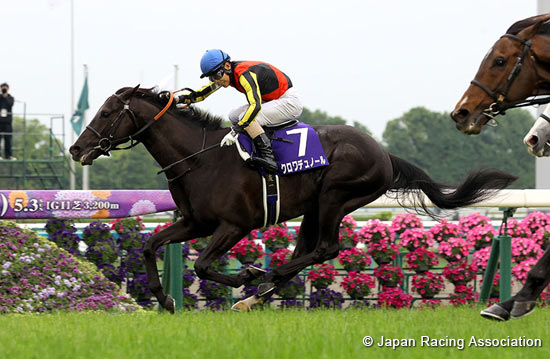
Shogo Yasuda, trainer
“Considering that he won the Tenno Sho (Autumn) and came out of the race well, I think it was a very good race. There was some fatigue afterward but nothing that required much care, so we turned our sights here. Again, I want to focus on keeping him in a good mental frame. The week after the race, we focused on his recovery with light training sessions to be sure he didn't get too tense or overly eager. The next week, we gave him faster gallops leading up to where we are now. Last week’s workout was mainly to check on his mental state, namely anything that could disrupt his training form. We had him work alongside another horse, and he maintained good balance, didn’t get agitated or fight the rider. This time the starting gate will be in front of the grandstand. The warm-up canter to the holding area could cause him to get worked up. Taking all of this into account, I planned this week’s final gallop to around keeping him in a good frame of mind. And, all went smoothly.”
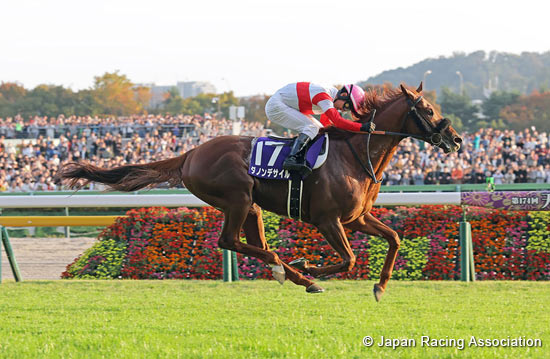
Teiichi Konno, trainer
“It’s been a long time since his last race, the Arima Kinen last December, but two weeks ago in morning work his breathing greatly improved. If his preparation continues to go smoothly, I think he’ll be able to race at the best of his ability. The competition is going to be strong and I am very, very aware of that. But, instead of being concerned about the other horses’ ability, I’m going to focus on getting this horse into the shape where he can give it his best in the race. Since the autumn as a 4-year-old I have noticed that he is moving much more powerfully. He has matured very well and, with a look to the future as well, I do hope he’ll do well on Sunday.”

Noriyuki Hori, trainer
(After a workout amid three horses on the Miho woodchip course Nov. 25)“
“Rather than focusing on building his explosive speed, I had the rider let him stretch out at his own rhythm. He finished the workout (82.7 seconds over 6 furlongs with a final furlong at 12.1 seconds) with something still in reserve. Compared to his last race, he seems much more composed physically and mentally. I think he’s making progress. He stayed at the training center after his last race (the Grade 2 Copa Republica Argentina over 2,500 meters at Tokyo) on Nov. 8 and after his latest workout he weighed 481kg. The pace and flow of his last race didn’t allow him to show his strengths and he still had a lot left in the tank. He came out of the race well, has been eating well, is healthy, and his overall condition is stable. The competition is strong, but anything can happen in a race, so I think he has a chance.”
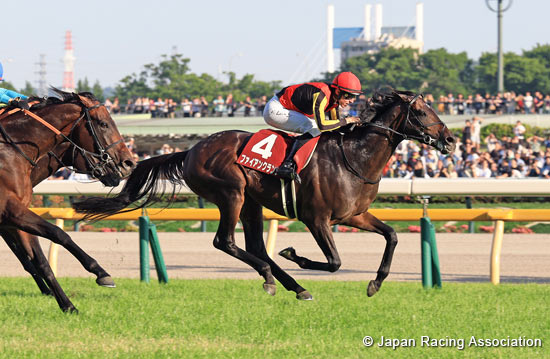
Takahisa Tezuka, trainer
“In the Tenno Sho, he was calm and in good shape, but he couldn’t get a good trip. In the homestraight, he had a wall in front. He came out of the race well. He returned from the farm on Nov. 13 and has been getting regular work. I can’t say I’m confident, but if the race favors late speed, I think he has a chance. For his fast work on Nov. 25, I used the woodchip track instead of the hill course, for the first time in quite a while. I mainly wanted to see how willing he was to run and how he handled the turns. I think he took the bends more smoothly, but there wasn’t any significant difference. He has always had a tendency to lose ground when he’s rounding the bends, and that was a problem in his most recent race. So, I’ve had him in cheek pieces in morning work. This week, I only had one the left, whereas last week I put them on both sides. I’ll make a final decision about those later in the week.”
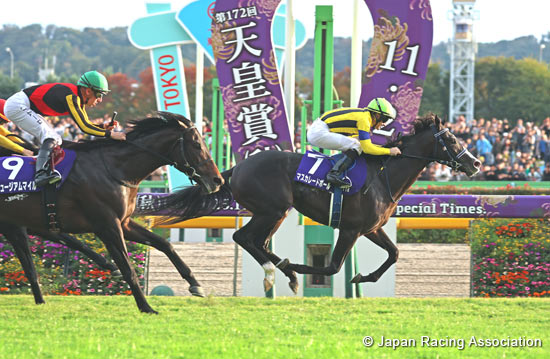
Mamoru Ishibashi, trainer
“We’d trained him in France leading up to the Arc and he had seemed to be in good shape. He didn’t seem to be having too much trouble in the race either, but compared to how he usually does, the race seemed to be wearing him down. His finishing order was a double-digit number, but I don’t think it was a huge loss, certainly nothing tragic. He went from quarantine directly to the farm, then returned to Ritto on Nov. 5. Three weeks ago, he still wasn’t at his best, but he’ll surely improve until race day. Last week, he worked with a partner over the woodchip course. He chased that horse and beat him to the line. Compared to his best times, I think he needs a bit more. In this year’s Takarazuka Kinen, instead of taking the lead, he traveled in second position and won nicely. He has won over the counter-clockwise Chukyo course and I hope he’ll do well so people won’t say ‘he only does good at Hanshin.’”
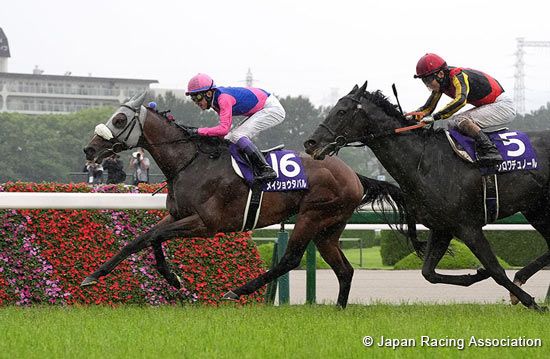
Yu Ota, assistant trainer
“His weak point has always been difficulty in advancing over the latter half, so his poor results in the Kyoto Daishoten couldn’t be helped. But he kept racing until the end and that was good. He was at the farm after that and returned looking fresh. His coat was shining. His footwork is good normally, but it looked even better. We worked him over a long distance of seven furlongs on Nov. 11, and on the 18th, we had Tom Marquand ride and he gave him a good, hard workout. The jockey got a good reading on the horse. The horse does get very stiff over his back and we’re doing all we can to give him the best of care while still getting him race-ready. The distance and the direction of the track shouldn’t pose any problems, but I do think with the gate close to the first turn, the break will be more important than usual. I’m hoping he can get a good trip with no interference.”
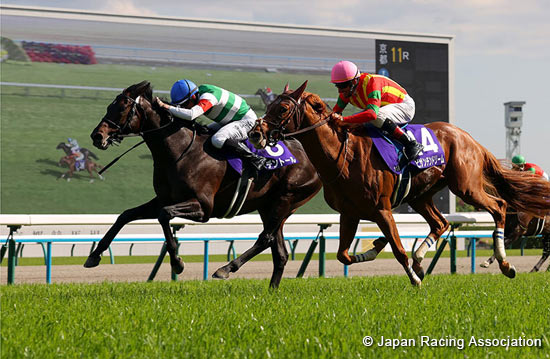
Toru Miya, trainer
“In his most recent race, the Tenno Sho (Autumn), he did a lot better than I had anticipated amid such a strong field. The race did unfold to his liking in places, but the powerful late kick of the winner was simply far superior. After that, he had a week rest at the farm and since returning to the training center, he’s been his usual energetic self. Last week and race week, I didn’t feel that he needed to get that much work since I want him to just maintain the condition he has. These days he isn’t losing much weight during a long haul to the racetrack. He does tend to get a bit keen so I would have to say his best distance is 2,000 meters, but if the rider can keep him even-keeled, I think he should be fine. Unlike Tagano Dude, this horse would do better if the race favors the horse with the best late speed and it’s over a fast track. If he can go with the flow, it’ll be easier for him to stay in tune with the rider.”
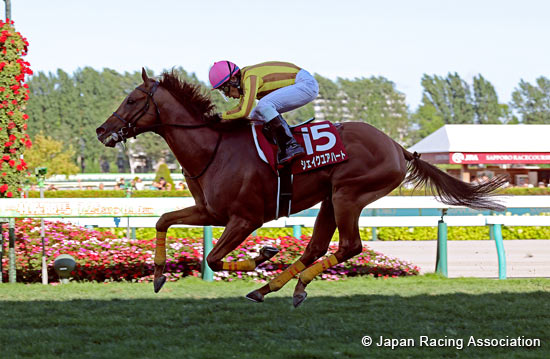
Toru Miya, trainer
“He was returning from time off so his performance in the Challenge Cup was much as expected (finished 11th of 16). He does better with a prep, and in the Tenno Sho (Autumn), he did show improvement. He stayed close behind Danon Decile and advanced well in the final stage to finish in fourth place. He doesn’t have the best turn of foot but he did pick it up right before the finish. It was a perfect prep for here. He has improved a lot with that race. I think 2,000 meters is his best distance, but he does like to get cover early and move up slowly, so 2.400 meters should be OK. He can hold his own amid the Japanese horses, but don’t know how he’ll measure up to the horses from overseas. If the ground had some spring to it, it would make things more interesting. He doesn’t have much of a late kick though.”
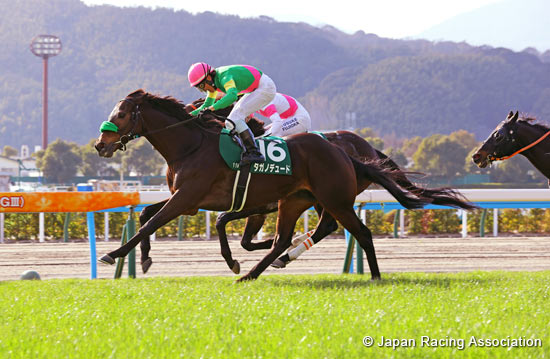
Ryo Takei, trainer
“He has a lot of power so I had thought he would be able to handle the poor going in the Niigata Kinen. Still, he gave it his all and that should stand him well here. We haven’t pushed him to the point where he switches on too much, but just enough to keep his heart and lungs in good order. On Nov. 18, I had him work with two other horses, this one holding back and then accelerating to catch them in the finish. The work went as planned, but he did have the bit in his teeth at times. He was relaxed, which bodes well for race day and the gate right in front of the grandstand. The horse is recognizing the patterns and remaining calm. But I’m still considering changing some things up. He no longer is keen under way, so I’m expecting a good performance. He turned in a great performance in last year’s Tenno Sho (Autumn), so I think Tokyo suits. He’s the Kikuka Sho champion, so the distance won’t be a problem.”

Hiroshi Miyamoto, trainer
“In his most recent race, the Kyoto Daishoten, the race didn’t unfold in a way that suited him. In the final stage, where he was able to run his own race, he did look good. I think his performance itself was not bad. He went to the farm after that and came back to the training center refreshed. On Nov. 18, he worked under Norihiro Yokoyama once around the flat course with a training partner. The ground was heavy and he clocked 81 seconds over six furlongs. His time over the last three furlongs was 35.5 seconds, with a final 200 meters in 11.4 seconds. The rider said, ‘I know this horse well and I knew that if I got after him more he still wouldn’t up his pace.’ But, I think his performance was adequate for me to give the go signal that he was ready. The competition is just too strong, but the long stretch will be a plus factor. It’ll be good if he can draw on his strongpoint, his stamina.”
Sources: Gallop, Keiba Book, Radio Nikkei,


