Tokyo Yushun (Japanese Derby) (G1) - Comments from runners' connections
(All entrants are 3-year-old colts)
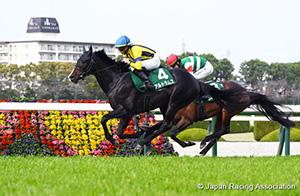
Altramuz
Kenji Nonaka, trainer
“He had a very unfortunate trip in the Satsuki Sho, but it will surely stand him well in the future. He made his way up to that race on potential alone and his career is still young, and he will improve from here on. We got him fully recovered and things have gone smoothly since. I found no fault with his movement last week and if things continue to go well, he’ll once again go to the gate in good shape. I think the Tokyo course will suit him but I don’t know how well the distance will. If he can travel well-balanced, he can run very nicely and I do see steady improvement. I’m looking forward to seeing just how well he can do on this stage.” |
|
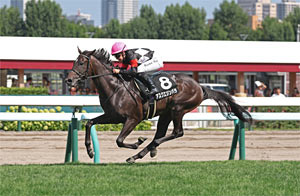
Ask Edinburgh
Yuichi Fukunaga, trainer
“His Satsuki Sho run was perfect. He somehow knew what the best position would be and went for it without getting keen. Because he was so well in hand, the horse and the rider (Yasunari Iwata) were able to make that decision. Considering the track bias, I’d say fourth place was the best we could hope for. Iwata had ridden all his work, but he was injured on May 17, so we had Mirai Iwata ride work on May 20, with this horse starting from behind and passing another horse. This one seemed to lose interest when he passed the other horse and his time wasn’t quite up to what he can do. So, we gave him a good hard workout on May 24 as well. He’s definitely in good shape and better than how he was for his previous race. There’s no concerns about the change in course, but the horse does lose a lot of weight hauling to the track, so that will be key.” |
|
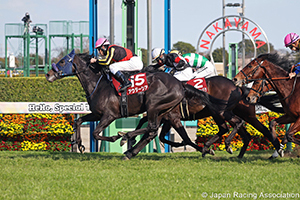
Audacia
Takahisa Tezuka, trainer
“He was a bit heavy for the Grade 2 Spring Stakes, but he ran at a good speed at length, and brought out his best. We passed on the Satsuki Sho and gave him time off, which was the plan from the start. He never looks too good in morning work, and he finished behind his partner on May 20, but that horse really moves and there was no problem with this one. I had Damian Lane ride him on May 20 to get a reading and the horse did very nicely. I think he’s in much better shape than he was for his previous start. If the pace is slow he’ll tense up. His half-brother prefers a mile or shorter, but I think this one will be fine, and Tokyo suits. He’s looking leaner this time and was tense in work before he picked up the gallop and raised his head going into the straight, but I think he’ll be fine at race pace. He should be able to handle the distance.” |
|
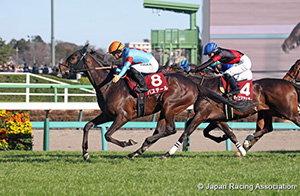
Basse Terre
Takashi Saito, trainer
“He was a bit slow away in the Satsuki Sho and with that track and how the race unfolded, it would have been hard to stalk the pace. Still, turning out of the backstretch, he ran well for quite a distance and I could see he’d be able to handle the Derby. After time at the farm, we aimed him for here. Unlike before the Satsuki Sho, he returned to the training center with more condition, so he has been easier to prepare. He worked over the course on May 20 under Yuga Kawada and I would have liked his movement to have been a bit better, but he’ll surely improve with that workout. He won the Yayoi Sho at Nakayama but, unlike the crowded Satsuki Sho at Nakayama, I think the more open Tokyo 2,400 meters will be easier for him.” |
|
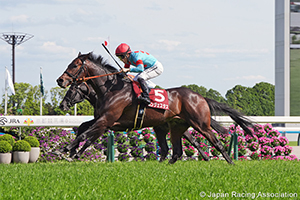
Congestus
Tomokazu Takano, trainer
“The Kyoto Shimbun Hai was a difficult race. The competition was strong, but he won. Even though it wasn’t a perfect race, the fact that he won is evidence of his ability. He has matured with each race and his performance reflects that. There were only two full weeks in between races and we were careful to give him both work and time to relax. Riding him, I noticed no signs of damage. Jockey Atsuya Nishimura rode him up the hill course on May 20 just with the idea of maintaining what condition he has and a bit of fine-tuning. On May 24, he worked up the hill again, but under an assistant and with another horse. His time was a little faster than usual and when he lined up with the other horse, we made sure he didn’t lose interest or start fooling around. He took the hill twice for a total of 800 meters. On May 27, the same, but alone, and we were careful he didn’t overdo it. He was relaxed and had a lot more in reserve. The distance should be fine, but it wouldn’t be good if it’s hot.” |
|
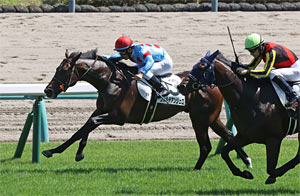
Forte Angelo
Yuki Uehara, trainer
“His late break in the Satsuki Sho hurt but his natural ability came into play and he made a good recovery. Looking at the patrol film, I could see that he made his up through quite a tight place in the final stage. And, he qualified for the Derby. After that, he went to the farm and got a lot of work and recovered his condition. He’s easy to prepare, so and to prevent overwork, I had him work alone on May 14. The ground was heavy, but he was able to easily quicken in the straight and he was eager to work. The jockey Kiwamu Ogino said ‘He has improved since the Satsuki Sho.’ Forte Angelo is a good racer and he’s not too bothered by varying conditions. He’s fine at Tokyo and settles well, so the distance should be OK.” |
|
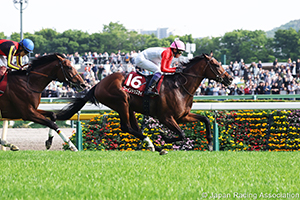
Going to Sky
Yuki Uehara, trainer
“Compared to other Derby hopefuls from my barn, I’d say this one still needs work. He’s not the most agile and he’s quite lowkey still, but I think he has great potential. In the Aoba Sho last out, Yutaka Take did a great job of bringing out the colt’s talent and he came out of that race without damage. I believe he has improved since then. On May 14, he worked between two other horses and traveled smoothly. Kiwamu Ogino rode and said the horse felt better than he had before the Aoba Sho. On May 21, Yukito Ishikawa rode with two other horses and it was clear this colt has improved since the Aoba Sho. With more time between races than he had for the Aoba Sho, it has made his preparation easier. The Aoba Sho proved he was suited to the course, and the jockey knows the Tokyo 2,400 meters like his own backyard which is reassuring.” |
|
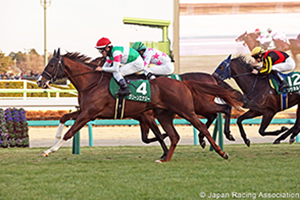
Green Energy
Yuki Uehara, trainer
“The Satsuki Sho was unfortunate. With the pace as it was, if you couldn’t race in a forward position, it made for a very difficult race. That said, I think his (seventh place) finish was thanks to the jockey (Keita Tosaki) not having moved him out but having kept him running even keeled amid the others and in perfect balance. Though he lost, I think the experience will serve him well here. He has always been better racing to the left and he does better with more distance, which are both pluses here. On May 14, he worked in front of two other horses, focusing on his balance. He changed leads well and I think he has improved. Last week, he did have a slight fever, but after the Satsuki Sho, he was largely ready and I thought it more important to give his condition priority than to push him hard. I’ve always felt he was well suited to the Tokyo course and I think the extra distance will be a plus.” |
|
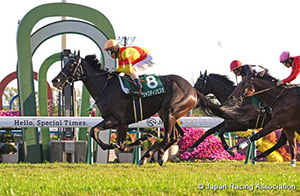
Justin Vista
Tatsuya Yoshioka, trainer
“He was a bit slow away in the Hopeful Stakes and underway he was boxed in for a while, which, naturally, made it hard to maneuver. It was a tough position and that kind of thing happens a lot at Nakayama. Counting back from the race, we had him return to the training center after recovering from an avulsion fracture and he has completed all the workouts needed. There’s no problem with his condition or his footwork. Though he was still quite immature at the age of 2, he seems to have matured considerably, mentally and emotionally. He doesn’t get upset easily or fret over little things. I think the wide-open Tokyo 2,400-meter course will suit him.” |
|
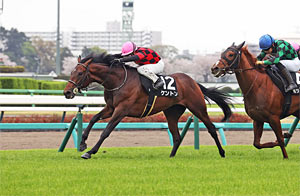
Kenton
Toshiaki Tajima, trainer
“His condition is on an even keel, unchanged in a good way. He worked with a training partner on May 26, but is still weak in some areas, so I just breezed him so as not to overdo it. Jockey Yuji Tannai rode him on the flat and they covered six furlongs in 81.5 seconds, with the final furlong in 11.7 seconds. His partner moves well in trackwork and it was a good workout. Kenton is not the kind of horse that improves the more you work him. His performance in the Aoba Sho wasn’t great (finished tenth of 18), but it did give him a chance to make the Derby lineup. It was also good that he was able to gain experience at Tokyo. He has stamina and no problem with settling. It would be good if it rains. Honestly, he’s not good in the heat, so a strong breeze would be good too. I’m looking forward to standing, for the first time, together with all my staff, on the Derby stage.” |
|
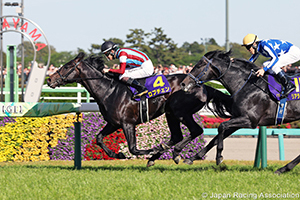
Lovcen
Kohei Matsuyama, jockey
“He was calm on the day of the Satsuki Sho. The draw was good and his start wasn’t bad, so I went for position right away. He has speed and we went to the front. The latter lap times were faster and he was able to keep something in reserve, then held on until the end. It was a very strong race. He used to be quite excitable but he has grown in terms of temperament. He has had a good physique since he was 2 years old, but I think he’s more powerful and solid now. His work on May 20 felt the same as his work before the Satsuki Sho and his prep seems to have gone smoothly. I don’t think the distance will be a problem. He has experience over the Tokyo 2,400 meters and that’s a big advantage. He’s the only one with a chance at the Triple Crown, so I’m hoping to get good results. The Derby has been my dream since I was a child. I think it’s the dream of every horseman.” |
|
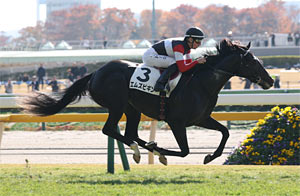
M’s Begin
Yasuo Tomomichi, trainer
“In the Kyoto Shimbun Hai, things got very tight in the first turn. He got squeezed in and pushed back. I would have liked him to have raced a bit more strongly, but he is still young. On May 21, jockey Francisco Goncalves rode work and he said the horse was keen at points, but that he got a good reading on him. After work, he also said the colt was “very strong.” He has gotten good results at Tokyo (broke his maiden over 2,000 meters at Tokyo) and the spacious venue suits him. That said, it is the Derby this time. We’ll just have to see how well he can do.” |
|
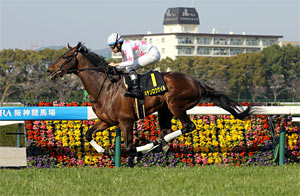
Matenro Gale
Kenji Nonaka, trainer
“In his most recent race, the Satsuki Sho, he missed the break and raced from the rear. He was tense from the first bend to the backstretch and he didn’t settle at all. On top of that, he got pushed to the outside, so it was a difficult spot to be in. With a fast track and for a G1 pace, it was actually quite relaxed but the way the race unfolded for him just didn’t suit. That said, he was looking good coming into the stretch, so it was by no means a disaster. He has recovered from that race and his physique is looking good. I think he is suited to the Derby and the wide-open Tokyo course. If he can break halfway decently and run at his own rhythm, I am looking forward to what he can do.” |
|
| Meisho Hachiko
Mitsunori Makiura, trainer
“Two starts ago, at Nakayama when he broke his maiden, there was a wall ahead, but he drew on all he had in the final strides. In the Principal Stakes last out, he moved quickly from the outside to get a good position and traveled nicely. With the jockey (Michael Dee) guiding him gently out of the backstretch, he got a bit of a breather and I think he showed what he can do at Tokyo. This will be his fourth start this year and the main event. He has fully recovered from his last start and I think he has improved. He has matured slowly and he has learned to be more patient, which was evident in the Principal Stakes. The competition will be a lot stronger but he has been getting stronger with each race.” |
|
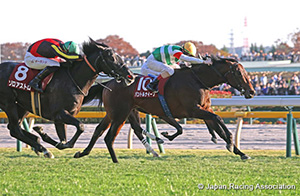
Peintre Naif
Yu Ota, assistant trainer
“We had to withdraw from the Yayoi Sho and took on the Satsuki Sho without a prep. He wasn’t in that bad of shape, but the way the race unfolded didn’t work well for him. He had to fall back coming into the straight and that was a bad blow. The results were disappointing (14th place) but the jockey (Christophe Lemaire) said he would stick with this horse and we humbly accepted his offer. The horse came out of the Satsuki Sho without damage and he’s gotten regular work since returning to Miho from the farm. We had the jockey ride work on May 20 just to hear his impression. He found it good and said the horse should be able to improve more until the race. It’ll be his first time over the Tokyo 2,400 meters. I don’t know what this horse’s future holds, but I think he should measure up against his peers.” |
|
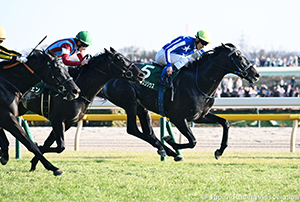
Realize Sirius
Takahisa Tezuka, trainer
“Right after the Satsuki Sho, he went to the farm for about two weeks and returned to Miho in good shape. On May 20, he worked on the flat under jockey Akihide Tsumura training with another horse. His footwork, time and overall movement were excellent. Tsumura was up again for fast work on May 27 and I had the horse work alone since the jockey had said earlier he’d been on edge. His movement was smooth and he didn’t look to be moving that fast, but being a big horse with a big stride, his time was actually faster than expected. The distance is new to him, but he did well in the Satsuki Sho and although his sire was a miler, his damn has Stay Gold blood in her, so I think he can handle the distance, especially among peers. I don’t think the track condition will matter much, but since they’ve just switched to the C course, it’s not going to be as advantageous as it was last week for front-runners or those who run very close to the pace.” |
|
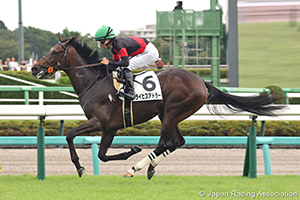
Reichsadler
Yuki Uehara, trainer
“He really tried hard in the Satsuki Sho and finished in third place. He made contact with another horse in the first bend, chomped down on the bit and didn’t want to let go. He may do the same in the Derby, so I’ve been very careful about that in training. On May 14, I checked on how well he could settle. He worked with two other horses, came up from behind and went to their inside. He looked good and relaxed. When asked to move up, he was a bit slow responding. On May 21, he worked in between two other horses and his responses were far better than the week before. Jockey Daisuke Sasaki got after him just before the finish line in order to check his responses. He looked good and about a level higher than he was in the Satsuki Sho. He changed leads smoothly and it was a very good workout. The venue shouldn’t be a problem. How well he settles under way will, of course, be key to what he’ll have for the finish.” |
|
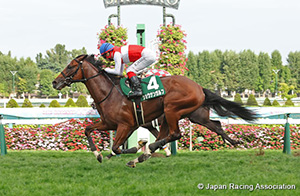
Shonan Gulf
Naosuke Sugai, trainer
“In his most recent race, the Kisaragi Sho, he had a hold of the bit and that was a factor in his last-place finish. The more he races, the more difficult he is to settle. But I don’t think that is a reflection of his potential. He had an accident while way at the farm and after giving up on the Satsuki Sho, we decided to aim him here. Counting back, we had him return to the training center six weeks ago and he has handled all the work given him. His overall time over the woodchip course on May 20, with Suguru Hamanaka up, was 81.5 seconds, with a fast final 11.5-second wrap, and I think he moved satisfactorily. I plan to go easy on him in the week of the race, as he’s in very good shape. Key on Sunday will be how well he settles.” |
|
Sources: Keiba Book, Netkeiba, Nikkei Radio, Gallop
|

- Preview
- Barrier draw
- Past performances of runners

- News
- Race result
- Video
- 2026 English

- 2025 English
- 2024 English
- 2023 English
- 2022 English
- 2021 English
- 2020 English
- 2019 English
- 2018 English
- 2017 English
- 2016 English
- 2015 English
- 2014 English
- 2013 English
- Photo Gallery
2026 Winner: Lovcen
2025 Winner: Croix du Nord
|














','../en/racing/news_media/gallery/img/2026/s2/26032801a.jpg','../en/racing/news_media/gallery/img/2026/b/26032801a.jpg'))
)
 (G2)','../en/racing/news_media/gallery/img/2026/s2/26031502a.jpg','../en/racing/news_media/gallery/img/2026/b/26031502a.jpg'))
 (G2)','../en/racing/news_media/gallery/img/2026/s2/260308a.jpg','../en/racing/news_media/gallery/img/2026/b/260308a.jpg'))
','../en/racing/news_media/gallery/img/2026/s2/26050901a.jpg','../en/racing/news_media/gallery/img/2026/b/26050901a.jpg'))
)
 (G2)','../en/racing/news_media/gallery/img/2026/s2/260425a.jpg','../en/racing/news_media/gallery/img/2026/b/260425a.jpg'))
','../en/racing/news_media/gallery/img/2026/s2/26011802a.jpg','../en/racing/news_media/gallery/img/2026/b/26011802a.jpg'))
','../en/racing/news_media/gallery/img/2025/s2/251129a.jpg','../en/racing/news_media/gallery/img/2025/b/251129a.jpg'))
)
 (G1)','../en/racing/news_media/gallery/img/2026/s2/26041902a.jpg','../en/racing/news_media/gallery/img/2026/b/26041902a.jpg'))
)
)
','../en/racing/news_media/gallery/img/2025/b/251124a.jpg','../en/racing/news_media/gallery/img/2025/b/251124a.jpg'))
 (G3)','../en/racing/news_media/gallery/img/2026/s2/26021502a.jpg','../en/racing/news_media/gallery/img/2026/b/26021502a.jpg'))
)
','../en/racing/news_media/gallery/img/2025/s2/25090601a.jpg','../en/racing/news_media/gallery/img/2025/b/25090601a.jpg'))
 (G1)','../en/racing/news_media/gallery/img/2026/s2/26053101a.jpg','../en/racing/news_media/gallery/img/2026/b/26053101a.jpg'))
 (G1)','../en/racing/news_media/gallery/img/2026/s2/26053101b.jpg','../en/racing/news_media/gallery/img/2026/b/26053101b.jpg'))
 (G1)','../en/racing/news_media/gallery/img/2025/s2/25060101a.jpg','../en/racing/news_media/gallery/img/2025/b/25060101a.jpg'))
 (G1)','../en/racing/news_media/gallery/img/2025/s2/25060101b.jpg','../en/racing/news_media/gallery/img/2025/b/25060101b.jpg'))